
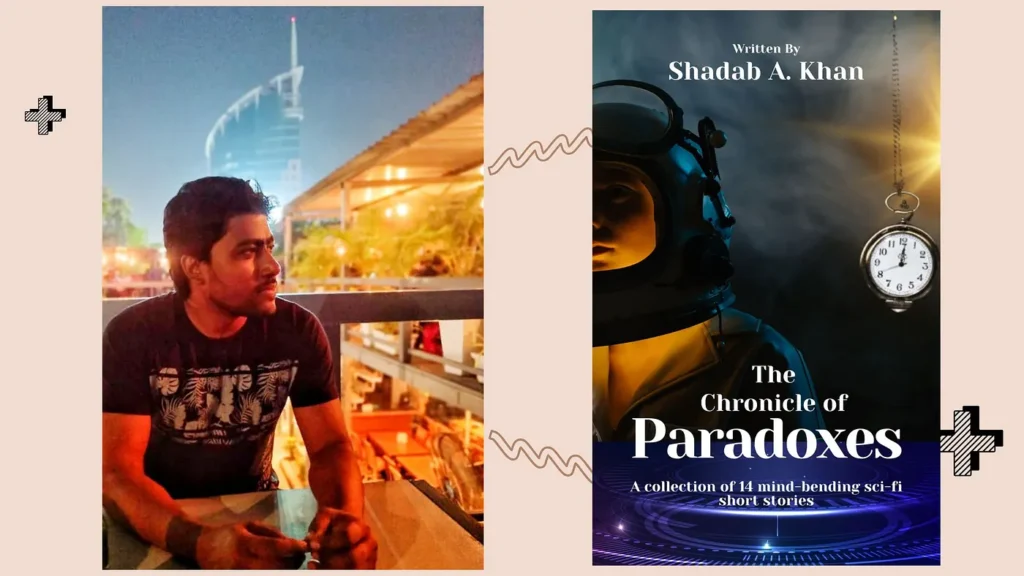
Discover how a random start with Mental Health Journaling evolved into a published book in just 10 months.
Discover how a random start with Mental Health Journaling evolved into a published book in just 10 months.
1. Introduction: Writing Saved Me — Literally
This is the third part of my journey — a more personal chapter about how mental health journaling didn’t just help me cope with anxiety and stress, but led me somewhere completely unexpected: to the final pages of my first sci-fi novel.
A while ago, I hit a low point. I had lost my job. My finances were in chaos. The constant overthinking and anxiety felt unbearable. Like many, I tried everything — motivational videos, mental health apps, talking to friends and family. But nothing really worked.
One day, almost randomly, I opened a notebook and started scribbling. It wasn’t structured. It wasn’t meant for anyone to read. But those early pages — that messy, raw mental health journaling — turned into my therapy. Over time, those thoughts became characters. The stress became storylines. And 10 months later, I had a finished manuscript in my hands.
In this article, I’ll share how the simple act of journaling helped me rebuild my mental health, unlock creativity I didn’t know I had, and ultimately write my book “The Chronicle of Paradoxes.”
2. Hitting Rock Bottom: The Pressure, the Panic, and the Noise
Losing a job doesn’t just affect your bank account — it hits your identity. For weeks, I woke up with a heavy feeling in my chest. I kept replaying past decisions, questioning everything, worrying about the future. The silence of unemployment was loud. And the pressure of not having answers made my thoughts feel like a constant storm.
I tried to keep myself busy. I watched self-help videos, installed every mental health app I could find, and leaned on friends and family. Their support mattered — it really did. But the stress kept crawling back at night. The overthinking wouldn’t stop. It wasn’t burnout anymore; it was something deeper. Something closer to helplessness.
I didn’t want to give up. I kept searching for anything that could help me feel grounded. That’s when I picked up a pen and started writing — not because I had a plan, but because I had nothing to lose.
Read more: Mental Health Journaling Part I
Mental Health Journaling Part II
3. The Accidental Discovery: Journaling Helps Mental Health
By now, we’ve seen how mental health journaling — whether through expressive writing or guided prompts — can lower anxiety, improve clarity, and even support long-term emotional healing. I’ve already written about how science backs it up, and how simple daily habits can make a difference.
But for me, it wasn’t planned. There was no intention to “journal for mental health.” I didn’t even call it journaling.
One day, I just grabbed a notebook and started scribbling. No prompts. No structure. Just raw lines like “I hate feeling stuck,” or “What if the world ran out of time?”
Those scribbles weren’t meant to be a story. But somehow, they became one. I imagined a broken world. A character stuck in a time loop. A fight against destiny. I didn’t realize it then, but I had stumbled into my own version of therapy — not by talking, but by writing.
That’s how mental health journaling helped me without me even knowing it. What began as survival slowly evolved into short stories — and one of them became the seed for The Chronicle of Paradoxes.
4. The Healing Through Creation: 10 Months of Writing
Writing became more than just an escape — it became therapy. A quiet space where I could pour my anxieties, shape them into words, and give them structure.
In the beginning, I didn’t have a clear plan. Some days I wrote thoughts, other days strange ideas or half-dreams. But the act of showing up every day — even when I had no motivation — started to ground me. Slowly, what began as scattered scribbles turned into a story. And that story started to hold me together.
I built a fictional world while trying to rebuild my own. The Chronicle of Paradoxes wasn’t just science fiction — it was my emotional mirror. Every paradox I wrote reflected a contradiction I was living: fear and hope, loss and growth, uncertainty and imagination.
There were moments when I found myself tearing up over a scene — not because of what the character felt, but because it helped me understand what I had felt but never expressed. I remember one night, I wrote a character facing isolation on a strange planet — and only after finishing the scene did I realize I had written about my own loneliness during joblessness.
Even after I found a new job and my financial stress eased, I couldn’t stop writing. It had become part of my daily rhythm — like breathing, like healing.
Those ten months weren’t just about finishing a book. They were about finishing a chapter of my life — not by forgetting the pain, but by transforming it.
5. Finishing the Book: The Chronicle of Paradoxes
What started as scattered thoughts became chapters, and chapters slowly turned into a manuscript. It wasn’t easy — there were long nights, moments of self-doubt, and days when I wondered if any of it mattered. But somehow, I kept showing up.
I didn’t have a writing schedule carved in stone. Sometimes I wrote early in the morning, sometimes late at night. But every time I wrote, I felt lighter. I wasn’t just building a sci-fi world — I was reclaiming control over my own.
The Chronicle of Paradoxes eventually became a symbol of everything I had survived. The paradoxes in the book — time loops, fractured realities, impossible choices — all mirrored the mental loops I was trapped in during depression and anxiety.
Finishing it gave me closure. Not just as a writer, but as someone who had struggled and slowly healed through words.
And here’s the thing: I didn’t finish it because I had everything figured out. I finished it because I kept going when I didn’t.
6. What I Learned (And What You Can Take Away)
I’m not a therapist or a mental health expert — just someone who went through a rough patch and found an unlikely lifeline in writing.
What I’ve learned is simple:
Writing won’t solve all your problems, but it can give you a space to face them. Whether it’s journaling your thoughts, building a fictional universe, or scribbling one confused sentence after another — it counts.
Here are a few things that might help if you’re going through something similar:
Start small. Don’t worry about structure or perfection. Just write.
Don’t wait to feel “inspired.” Make it a habit, like brushing your teeth.
Let it be messy. It’s not about being a great writer — it’s about being real.
Use writing as reflection, not escape. Even fiction can hold truth.
If you’re struggling right now, I hope my story offers you some encouragement. You don’t need fancy tools, expensive therapy apps, or a detailed plan. Sometimes, a pen and paper — or a blank doc on your screen — can be the start of something truly healing.
Read My Book: “The Chronicle of Paradoxes: A collection of 14 sci-fi short stories” – Available on Amazon/kindle