
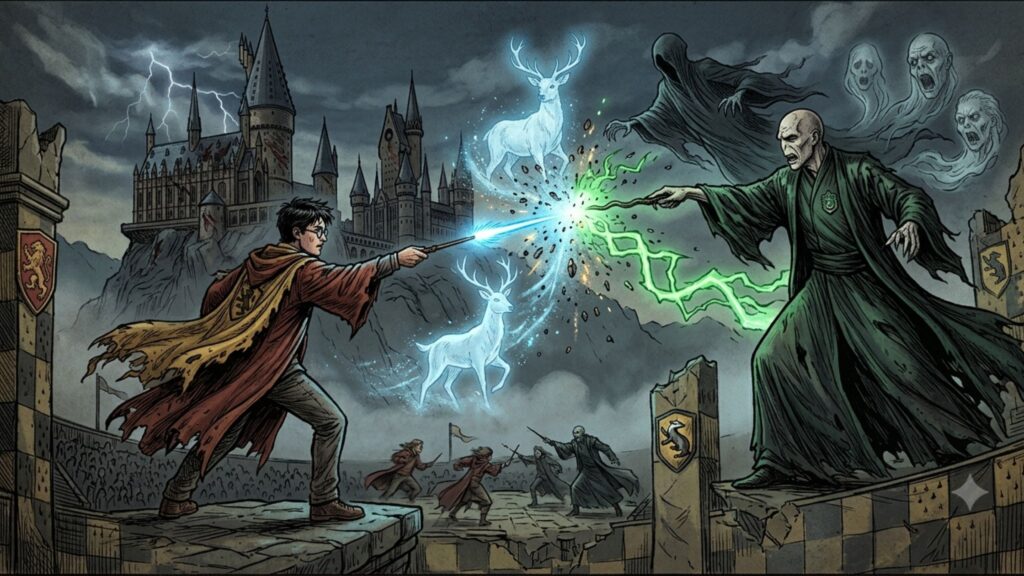
Harry Potter: A Beautiful Castle Built on Fragile Foundations
Few stories have captured the imagination of readers as successfully as Harry Potter. For an entire generation, Hogwarts was not merely a fictional school—it was a place they wished existed. Readers dreamed of receiving an acceptance letter, being sorted into a house, attending magical classes, flying on broomsticks, and spending their childhood inside a castle filled with mystery and wonder.
I was no different.
Like millions of readers around the world, I fell in love with the fantasy. Hogwarts felt alive. The friendships felt genuine. The adventures felt exciting. The world created by J. K. Rowling offered an escape from reality while simultaneously making childhood feel more magical than it ever could be in real life.
Yet something interesting happens when a reader grows older, especially if they begin studying stories not just as a fan but as a writer.
The questions change.
Instead of asking, “What happens next?” one begins asking, “Why does this happen?” Instead of admiring the magic, one starts examining the machinery behind it. The spell does not disappear entirely, but the hidden gears become visible.
Viewed through that lens, Harry Potter becomes a fascinating case study. The series remains extraordinarily effective at creating wonder, emotional attachment, and a sense of belonging. At the same time, many of its narrative foundations begin to look surprisingly fragile. The world often bends around the protagonist. Institutions behave irrationally. Adults frequently become less competent so that children can become more important. Plot convenience sometimes triumphs over internal logic.
This article is not an attempt to argue that Harry Potter is a bad series. Quite the opposite. Bad stories do not leave such a lasting mark on culture. Rather, this is an attempt to understand a more interesting question:
Why does Harry Potter continue to enchant millions of readers even when many of its weaknesses become increasingly obvious under scrutiny?
My argument is that Harry Potter’s greatest strength and greatest weakness are ultimately the same thing. The series creates such a powerful fantasy of childhood, belonging, and adventure that readers willingly forgive flaws they might never tolerate in a less enchanting world.
Hogwarts is one of the most beautiful dreams ever constructed in fiction. The question is whether the castle remains as impressive once we start examining its foundations.
Table of Content:
- The chosen one problem
- The competence collapse of adults
- Hogwarts as an institution makes little senses
- The Triwizard tournament and manufactured danger
- Plot convenience and expanding magic
- Is Harry Potter really different from children’s adventure cartoons?
- How Rowling Made Readers Forgive the Flaws
- Conclusion: A master piece of emotion, not logic
1. The Chosen One Problem
One of the most common defenses of Harry’s central role in the story is also one of the strongest. Harry is not important by accident. The series provides several legitimate reasons why he becomes the focal point of the conflict.
There is the prophecy linking his fate to Voldemort’s. There is Voldemort’s own decision to target him as a child. There is the unique connection created between them through the accidental transfer of a fragment of Voldemort’s soul. These elements make Harry indispensable to the story. Remove Harry, and the conflict itself changes fundamentally.
The problem is not that Harry is important.
The problem is that Harry often becomes more than important.As the series progresses, Harry repeatedly finds himself at the center of crises that should logically involve far more capable witches and wizards. Time and again, experienced adults become observers while a teenager becomes the decisive factor. The issue is not that Harry participates in these events. The issue is that the story frequently elevates him from being a critical piece of the puzzle to being the person around whom the entire puzzle seems to revolve.
This creates a subtle but important distinction.
A protagonist can be essential without being the most competent person in the room.
Consider the many powerful figures surrounding Harry throughout the series. Dumbledore is widely regarded as the greatest wizard of his age. Sirius Black fought in the First Wizarding War. Severus Snape possesses extraordinary magical ability and intelligence. Aurors spend years training to combat dark wizards. Yet despite their experience and expertise, the narrative repeatedly places Harry in situations where he becomes the decisive actor while more qualified individuals are sidelined.
The result is a world that sometimes appears to function according to narrative necessity rather than internal logic.
This criticism is not about Harry’s magical ability. In fact, one of the interesting aspects of the series is that Harry is rarely portrayed as an unparalleled magical genius. Hermione often surpasses him academically. Dumbledore and Voldemort operate on an entirely different level of magical mastery. Harry’s defining qualities are courage, loyalty, determination, and a willingness to act when others hesitate.
Those qualities make him an admirable protagonist.
They do not necessarily explain why so many conflicts ultimately depend on him to such an overwhelming degree.
A stronger version of the story might have preserved Harry’s unique importance while allowing other characters to retain greater agency and competence. Harry’s connection to Voldemort would still make him the key to the final resolution. The prophecy would still matter. The soul fragment would still matter. His choices would still matter.
What would change is the distribution of responsibility.
Instead of becoming the solution to nearly every major crisis, Harry could have remained the critical link in a much larger struggle involving many capable individuals. Experienced wizards would continue fighting their own battles. Powerful mentors would remain powerful. Institutions would retain some credibility. Harry would still be indispensable, but not because the world repeatedly bends to place him at the center of every solution.
Ironically, this might have made Harry’s role feel even more significant. His importance would arise not because everyone else becomes less effective, but because there is genuinely something only he can do.
The distinction may seem small, but it fundamentally changes how a reader perceives both the protagonist and the world around him.
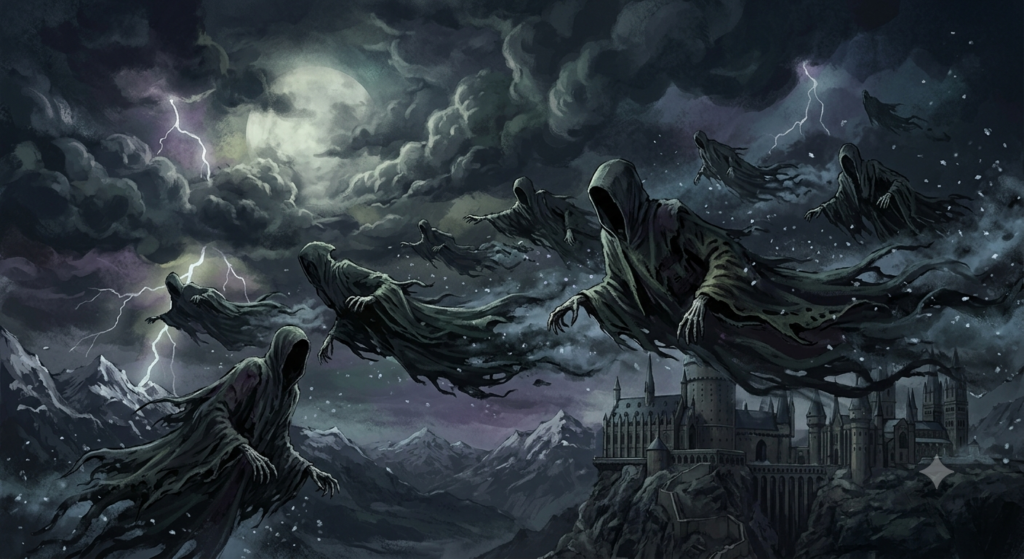
2. The Competence Collapse of Adults
The chosen one problem creates another issue that becomes increasingly difficult to ignore upon closer examination: the gradual collapse of adult competence.
In most functioning worlds, adults are expected to possess greater experience, knowledge, and capability than children. This does not mean children cannot be brave or important. It simply means that when a crisis emerges, the people who have spent decades preparing for such situations are usually expected to take the lead.
In Harry Potter, however, authority figures often become strangely inconsistent.
Not because they are inherently foolish, but because the story frequently requires them to step aside so Harry can step forward.
Dumbledore: Brilliant Until He Needs to Be Passive
No character illustrates this problem better than Albus Dumbledore.
At various points in the series, Dumbledore is portrayed as perhaps the greatest wizard alive. He is wise, experienced, politically influential, and magically powerful enough to make even Voldemort cautious.
Yet whenever Harry’s role needs to expand, Dumbledore’s effectiveness often contracts.
Information that could be shared is withheld. Threats that could be investigated are left unresolved. Situations that might reasonably justify adult intervention are allowed to develop until Harry becomes involved.
To be fair, Rowling often attempts to justify these decisions through Dumbledore’s personality. He is secretive, believes in allowing people to make their own choices, and occasionally admits to making mistakes.
The problem is that these explanations sometimes feel less like character traits and more like narrative necessities.
The reader is asked to believe that one of the most intelligent people in the wizarding world repeatedly allows events to unfold in ways that place extraordinary burdens on a child.
The Ministry: Incompetence as Plot Fuel
The Ministry of Magic suffers from a similar problem.
Governments can be bureaucratic. They can be corrupt. They can be slow. Those are realistic flaws.
The issue is that the Ministry often appears incompetent precisely when the story needs Harry to become more important.
Warnings are ignored. Obvious dangers are underestimated. Critical decisions are delayed. Leaders frequently seem less capable of understanding events than the teenagers at Hogwarts.
As a result, the Ministry sometimes feels less like an independent institution and more like a mechanism that creates space for Harry to act.
Rather than asking how a magical government would realistically respond to a growing threat, the narrative often asks how the government must behave for Harry to remain at the center of the action.
Teachers and Authorities: Adults Who Conveniently Fail
The same pattern appears throughout Hogwarts itself.
Teachers miss obvious warning signs. Security measures fail repeatedly. Dangerous situations are allowed to escalate until students become directly involved.
This does not happen once or twice.
It becomes a recurring structural feature of the series.
A reader eventually notices that adults are often effective only up to the point where their effectiveness would prevent Harry’s adventure from occurring.
The result is a peculiar imbalance. The world is filled with powerful witches and wizards, yet many of them become surprisingly passive whenever the plot requires a student to become the hero.
A World Built Around Its Protagonist
None of this would matter if it happened occasionally. Most stories contain coincidences, oversights, and convenient decisions.
The criticism arises because the pattern repeats so frequently.
Over time, the wizarding world begins to feel less like an independent reality and more like a stage constructed around Harry’s journey.
Institutions do not always act according to their own interests. Authorities do not always behave according to their own expertise. Adults do not always perform according to their established competence.
Instead, they often behave according to what the narrative requires at a particular moment.
This is where the illusion begins to crack for many adult readers.
As children, we accept that Harry must be the hero because we are experiencing the story through his eyes.
As writers, we begin noticing how often the world itself bends to ensure that outcome.
And once that pattern becomes visible, it becomes difficult to ignore.
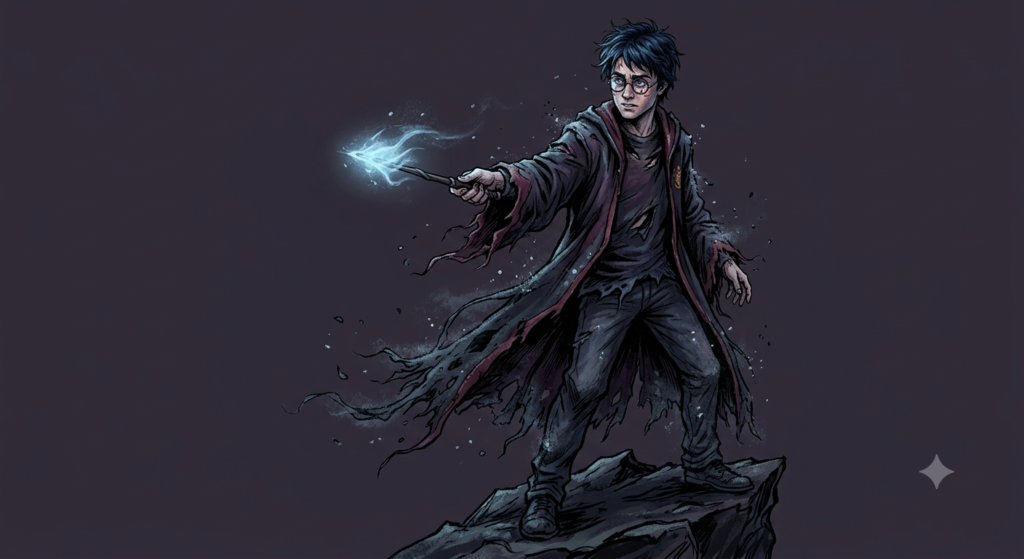
3. Hogwarts as an Institution Makes Little Sense
If Hogwarts is examined as a fantasy setting, it is one of the most imaginative schools ever created in fiction.
If it is examined as an actual educational institution, however, it quickly becomes difficult to defend.
This distinction is important because many readers unconsciously switch between these two perspectives without realizing it. As children, we view Hogwarts as a magical adventure. As adults, we begin asking whether any responsible person would actually allow children to study there.
The answers are often uncomfortable.
The Safety Problem
Throughout the series, Hogwarts is presented as a place where children are expected to live, learn, and grow. Yet the school is surrounded by dangers that would be unimaginable in any real educational environment.
There is the Forbidden Forest, a vast area filled with creatures that range from dangerous to outright lethal. Students are repeatedly warned to stay away from it, yet its very existence raises obvious questions. Why is such a location situated immediately next to a boarding school?
Then there are the numerous hidden passages, secret chambers, and unexplored sections of the castle itself. Students routinely discover locations unknown to teachers and authorities. Some contain dangerous creatures. Others contain magical objects with significant destructive potential.
The castle often feels less like a school and more like an ancient dungeon occasionally interrupted by lessons.
Even within the school grounds, potentially deadly situations appear with alarming regularity. Dangerous creatures are introduced into lessons. Magical artifacts capable of causing serious harm exist within reach of students. Security breaches occur repeatedly.
At some point, a reasonable observer must ask whether Hogwarts is designed for education or adventure.
The answer often appears to be the latter.
The Educational Problem
The safety concerns become even more striking when combined with the nature of magic itself.
Students at Hogwarts are not learning chemistry or mathematics. They are learning abilities that can directly affect other people, alter reality, manipulate minds, and in some cases cause severe harm.
This is the equivalent of placing extraordinary power into the hands of adolescents who are still developing emotionally and socially.
Yet the oversight often seems surprisingly limited.
Students engage in rivalries, conflicts, and personal disputes while simultaneously possessing increasingly powerful magical abilities. The potential consequences of mistakes, recklessness, or malicious intent are enormous.
A realistic magical education system would likely contain extensive safeguards, monitoring systems, licensing requirements, and restrictions.
Hogwarts often appears to rely on little more than school rules and the hope that students behave responsibly.
This creates a strange contradiction.
The wizarding world treats magic as a force capable of shaping society, yet the institution responsible for teaching that force often appears remarkably casual about its risks.
Discipline, Authority, and Logic
The disciplinary structure of Hogwarts raises similar questions.
Rules exist, but enforcement is inconsistent. Certain actions receive severe punishment while other incidents with potentially catastrophic consequences are treated surprisingly lightly.
Students are frequently placed in situations that seem disproportionate to their age and level of maturity. Authority figures oscillate between strict supervision and near-total absence depending on the needs of the story.
As with many aspects of the series, the institution often appears to operate according to narrative convenience rather than a coherent educational philosophy.
The school feels magical and memorable.
It does not always feel functional.
Why Readers Rarely Care
Despite all these issues, Hogwarts remains one of the most beloved locations in literature.
Why?
Because readers rarely experience Hogwarts as a real institution.
They experience it as a dream.
The castle offers mystery, friendship, belonging, adventure, discovery, and freedom. It transforms ordinary school life into something extraordinary.
The hidden passages are exciting rather than irresponsible.
The dangerous forest is intriguing rather than alarming.
The magical chaos feels adventurous rather than negligent.
In other words, Hogwarts succeeds because it functions as fantasy first and school second.
The moment we evaluate it as a genuine educational institution, countless problems emerge. The moment we return to viewing it as a childhood fantasy, many of those problems disappear.
This is one of the central tensions running throughout the Harry Potter series. Hogwarts is unforgettable precisely because it ignores many of the constraints that would make it believable.
The qualities that make it a wonderful fantasy are often the same qualities that make it a questionable school.
4. The Triwizard Tournament and Manufactured Danger
Among the many questionable decisions made by Hogwarts and the Ministry throughout the series, few are as difficult to justify as the Triwizard Tournament.
The tournament is presented as one of the most prestigious traditions in the wizarding world. It brings together students from different magical schools, celebrates cooperation, and showcases magical skill.
On paper, it sounds like the wizarding equivalent of an international academic and athletic competition.
The problem emerges the moment the characters begin explaining its history.
The Stated Reality
The series explicitly tells us that the Triwizard Tournament has a history of causing deaths and serious injuries. The dangers are not hidden. They are not rumors. They are part of the tournament’s reputation.
The competition was reportedly discontinued for years because it was considered too dangerous.
This information creates an immediate problem.
If everyone already knows the event has historically killed students, why would responsible adults choose to revive it?
The Logical Problem
The issue is not that the tournament contains risk.
Many sporting events, competitions, and adventures contain risk.
The issue is that the story acknowledges a history of student deaths and then proceeds as though that fact is merely an exciting detail rather than a serious concern.
The Ministry of Magic approves the event.
School administrators approve the event.
Parents presumably approve the event.
The wizarding world collectively accepts that teenagers will participate in a competition with a documented history of fatalities.
The narrative asks readers to treat this as normal.
From a storytelling perspective, this creates unnecessary strain on the world’s credibility.
A Stronger Alternative
Ironically, very little would need to change to solve the problem.
The tournament could still be dangerous.
It could still involve dragons, underwater challenges, and complex magical obstacles.
The difference would be presentation.
Imagine if the tournament were described as an event that was once deadly centuries ago but had since been modernized with extensive magical safeguards.
Officials could proudly claim that no student had died for generations.
The Ministry could emphasize safety.
Teachers could reassure participants that every precaution had been taken.
Then Voldemort’s interference would corrupt those protections.
Cedric Diggory’s death would become even more shocking because it would represent the first catastrophic failure of a system everyone trusted.
The outcome remains identical.
The logic becomes significantly stronger.
A Pattern Beyond the Tournament
The Triwizard Tournament stands out because the danger is openly acknowledged, but it is far from the only example.
Throughout the series, students are repeatedly exposed to risks that have little or nothing to do with Voldemort.
Long before Voldemort’s return, Hogwarts already contains numerous hazards.
Students are sent into the Forbidden Forest as punishment despite its reputation for dangerous creatures.
A troll enters the castle during Harry’s first year.
The Chamber of Secrets is hidden beneath the school, housing a creature capable of killing students.
The Whomping Willow is effectively a giant violent tree placed on school grounds.
Quidditch involves children flying at significant heights while being struck by enchanted objects traveling at dangerous speeds.
Even classroom activities occasionally involve creatures or magical situations capable of causing serious injury.
Many of these incidents occur independently of Voldemort’s influence.
They are features of the institution itself.
The Death Problem
One could argue that the series occasionally treats student endangerment with surprising casualness.
Cedric Diggory’s death is the most famous example because it marks Voldemort’s return.
However, the larger question is not why Cedric died.
The larger question is why so many opportunities for tragedy existed in the first place.
By the time Cedric dies, readers have already witnessed years of questionable decisions from adults entrusted with children’s safety.
The death feels shocking emotionally, but structurally it occurs within a world that has long normalized extraordinary levels of risk.
Why Readers Accept It
The answer, once again, lies in fantasy.
The dangers of Hogwarts are rarely presented as institutional failures.
They are presented as adventures.
The dragons are exciting.
The forest is mysterious.
The castle’s secrets are fascinating.
The risks contribute to the atmosphere that makes Hogwarts memorable.
Readers are encouraged to experience danger as wonder rather than negligence.
As a result, many accept situations that would appear absurd in almost any realistic setting.
The Triwizard Tournament ultimately reveals one of Harry Potter’s most persistent storytelling habits: danger often exists because the story needs excitement, not because the world logically supports it.
For many readers, the excitement is enough.
For writers and critics, however, the question remains difficult to ignore.
5. Plot Convenience and Expanding Magic
A fantasy world does not need a perfectly scientific magic system to be effective. In fact, some of the greatest fantasy stories ever written deliberately leave aspects of magic mysterious and unexplained.
The problem arises when the rules of magic appear flexible not because the world is mysterious, but because the plot requires them to be.
Throughout Harry Potter, magic often feels less like a force governed by consistent limitations and more like a tool that expands or contracts according to the needs of the story.
This does not destroy the enjoyment of the series.
It does, however, create questions that become increasingly difficult to ignore.
The Time-Turner Problem
No example illustrates this better than the Time-Turner.When introduced, the device appears to be one of the most powerful magical inventions in the entire wizarding world.
It allows a person to travel backward through time.
The immediate implications are enormous.
If time travel exists, readers naturally begin asking questions.
Why is it used so casually for academic scheduling?
Why is it not deployed during major crises?
Why is it not considered when lives are at stake?
Why would a world facing threats such as Voldemort not explore every possible application of such a powerful magical tool?
The existence of the Time-Turner creates more problems than it solves.
Eventually, the series quietly removes the issue by destroying the known Time-Turners and largely moving away from the concept.
From a narrative perspective, this decision is understandable.
From a world-building perspective, it feels like an admission that the device introduced complications the story could not comfortably sustain.
Magic That Arrives When Needed
The Time-Turner is merely the most obvious example.
Throughout the series, new magical abilities, objects, and rules often appear precisely when the plot requires them.
Sometimes these additions are entertaining.
Sometimes they are clever.
But they can also create the impression that the limits of magic are being discovered by the author alongside the reader rather than existing independently within the world.
A powerful magical object appears.
A new spell solves a particular problem.
A previously unknown magical property becomes important.
A hidden rule suddenly explains an obstacle.
Individually, these moments rarely feel significant.Collectively, they create a pattern.
Readers begin sensing that magic is not always constrained by established rules. Instead, the rules themselves often emerge in response to narrative needs.
The Difference Between Soft and Convenient Magic
Defenders of the series often point out that Harry Potter employs a “soft” magic system.
This is true.
A soft magic system intentionally preserves mystery and avoids explaining every detail.
However, mystery and convenience are not the same thing.
A soft magic system can still establish boundaries.
Readers do not need to know every rule, but they generally need confidence that rules exist.
The challenge arises when magic appears capable of accomplishing almost anything while its limitations remain unclear.
The less defined the boundaries become, the easier it is for solutions to feel arbitrary.
Tension depends on limitations.If readers do not understand what magic can or cannot accomplish, they may begin questioning whether obstacles are genuine or merely temporary.
The Story Comes First
To Rowling’s credit, this flexibility often contributes to the series’ sense of wonder.
The magical world feels imaginative because it constantly reveals new surprises.
The reader rarely feels trapped inside a rigid system.
There is always another secret to discover.
The trade-off is consistency.
Again and again, Harry Potter chooses excitement over structure.
New magical concepts are introduced because they create interesting situations.
Existing concepts are minimized when they become inconvenient.
The world evolves according to the needs of the narrative.
The Consequence
Ultimately, Harry Potter treats magic as a storytelling instrument rather than a governing framework.
The purpose of magic is not to constrain the plot.
It is to enable it.
This approach produces some of the series’ most memorable moments.
It also produces some of its most persistent logical questions.
For many readers, the wonder generated by the magic outweighs these concerns.
For writers examining the mechanics beneath the surface, however, the pattern becomes difficult to miss.
The magic system does not merely support the story.Quite often, it bends to serve it.
6. Is Harry Potter Really Different from Children’s Adventure Cartoons?
This may be the harshest criticism in this article, and perhaps the most controversial.
It is also the question that first pushed me to re-evaluate the series as a writer rather than a reader.
What remains if we strip away Hogwarts, the magic, the atmosphere, the nostalgia, and the emotional attachment?
What is the underlying structure of the story?
The answer may be less flattering than many fans would like to admit.
The Uncomfortable Comparison
At its core, Harry Potter often follows a structure familiar to countless children’s adventure stories and cartoons.
A young protagonist discovers they are special.
Adults either fail, disappear, misunderstand the problem, or become ineffective.
The child repeatedly finds themselves at the center of events.
The child succeeds where older and more experienced people cannot.
The world gradually begins revolving around the protagonist’s actions.
This structure is hardly unique to Harry Potter.
It appears throughout children’s fiction because it fulfills a powerful fantasy.
Children want to imagine themselves as important.
They want to believe they can make a difference.
They want to imagine a world where adults do not possess all the answers.
There is nothing inherently wrong with this formula.
The question is whether Harry Potter transcends it or merely disguises it exceptionally well.
A Skeleton Beneath the Magic
If we reduce the story to its basic components, some similarities become difficult to ignore.
Harry is the chosen child.
The adults repeatedly fail.Institutions repeatedly fail.
Warnings are ignored.Problems escalate.
Harry becomes the decisive factor.
The cycle repeats.
Viewed from this angle, the structure can sometimes resemble the very adventure cartoons and young hero stories that critics often dismiss as simplistic.
The difference is that Harry Potter rarely feels simplistic while reading it.
Why?
Because the skeleton is hidden beneath layers of exceptional presentation.
What Separates Harry Potter
This is where Rowling’s achievement becomes impossible to ignore.
Harry Potter is not beloved because of its plot structure alone.
It is beloved because of everything built around that structure.
The atmosphere is extraordinary.
Hogwarts feels alive in a way few fictional settings ever do.
The friendships feel authentic.
The mysteries create momentum.
The world invites exploration.
The emotional journey resonates across generations.
Readers are not merely following Harry’s adventures.
They are imagining themselves within the world.
They are choosing houses.
They are attending classes in their minds.
They are exploring secret passages.
They are remembering their own childhoods.
These elements elevate the experience far beyond the simplicity of the underlying framework.
The Power of Emotional Design
This distinction is important because it reveals where Harry Potter’s greatest strength truly lies.
Many discussions focus on plot.
Many debates focus on world-building.
Yet the series’ most remarkable achievement may be emotional design.
Rowling understands how to create attachment.
She understands how to make readers feel at home inside a fictional world.
She understands how to transform ordinary experiences—school, friendship, rivalry, belonging—into something magical.
As a result, readers become emotionally invested long before they begin examining the story’s mechanics.
By the time they notice the flaws, they already care.
The Question Worth Asking
This brings us to an uncomfortable but worthwhile question.
If Harry Potter lacked Hogwarts, the mystery, the atmosphere, the friendships, and the magical world, would its underlying story still be considered exceptional?
Some readers would answer yes.
Others would answer no.
My own view is that the answer matters less than what it reveals.
The exercise demonstrates just how much of Harry Potter’s success depends on its ability to create wonder.
The plot may not be as sophisticated as its reputation suggests.
The world may not be as logically consistent as fans often claim.
But the emotional experience remains powerful enough to compensate for those weaknesses.
And perhaps that is the most interesting conclusion of all.
The genius of Harry Potter may not lie in the complexity of its structure.
It may lie in how effectively it convinces readers not to look at the structure in the first place.
7. How Rowling Made Readers Forgive the Flaws
After examining the chosen one problem, the collapse of adult competence, the questionable safety of Hogwarts, the inconsistencies of the magic system, and the repeated use of plot convenience, an obvious question emerges:
Why did most readers never care?
The answer, I believe, lies in Rowling’s greatest strength as a storyteller.
Contrary to popular belief, her greatest achievement was not constructing a perfectly logical fantasy world. Nor was it creating the most rigorous magic system in literature. Many fantasy authors have built worlds with greater consistency, deeper histories, and stronger internal logic.
Rowling’s true achievement was understanding what readers wanted to feel.
She understood that most children do not dream about institutional competence. They dream about belonging.
They do not fantasize about well-designed educational policies. They fantasize about receiving a letter that tells them they are special.
They do not care whether every magical rule can survive rigorous scrutiny. They care whether the world feels magical.
Hogwarts delivers these emotions with remarkable effectiveness.
It transforms school from obligation into adventure.
It transforms childhood from an awkward phase of life into an epic journey.
It transforms ordinary friendships into lifelong bonds forged through extraordinary experiences.
Most importantly, it creates a place where readers genuinely want to live.
This is why so many of the series’ weaknesses survive scrutiny.
Readers are not blind to the flaws.Many eventually notice them.
They question the adults.
They question the Ministry.
They question the logic of the magic system.
They question the repeated dangers facing students.
Yet they continue to love Hogwarts.
Not because the criticisms are wrong, but because the emotional experience remains stronger than the inconsistencies.In this sense, Rowling accomplished something remarkably clever.
She built a world that readers became emotionally attached to before they had any reason to examine it critically.
By the time they noticed the cracks in the walls, they had already fallen in love with the castle.
And for many readers, that love proved stronger than the flaws.
Conclusion: A Masterpiece of Emotion, Not Logic
Harry Potter’s success is undeniable. Its cultural impact is undeniable. The emotional connection millions of readers have with Hogwarts is undeniable.
What is not undeniable is the quality of its underlying structure.
Throughout this critique, I have argued that many of the series’ most celebrated elements begin to weaken when examined through a writer’s lens. The chosen one narrative frequently elevates Harry beyond what the world’s internal logic can comfortably support. Adult competence often collapses whenever the protagonist needs room to act. Institutions behave irrationally. Dangerous situations exist because they are exciting rather than because they make sense. The rules of magic expand and contract according to narrative convenience.
None of these criticisms are fatal.
What makes them frustrating is that they were largely avoidable.
Harry could have remained the key to Voldemort’s defeat without becoming the solution to nearly every major crisis.
Powerful adult wizards could have remained active participants in the struggle without diminishing Harry’s importance.
The Triwizard Tournament could have preserved every ounce of suspense while maintaining institutional credibility.
Hogwarts could have remained magical without appearing recklessly irresponsible.
The wonder did not require the weaknesses.
In many cases, stronger logic would have strengthened the fantasy rather than weakened it.
This is why Harry Potter presents such an interesting challenge for writers.It proves that emotional immersion can often overpower structural flaws.
Millions of readers become so enchanted by Hogwarts, friendship, mystery, and adventure that they rarely stop to question the machinery beneath them. The fantasy is so effective that scrutiny becomes optional.
Yet once the enchantment fades and the machinery becomes visible, a different picture emerges.
The foundation is often simpler than its reputation suggests.
Many of the series’ most dramatic moments rely not on inevitable consequences but on conveniently weakened institutions, conveniently absent adults, and conveniently flexible rules.
The remarkable achievement of Harry Potter is not that it solved these problems.
It is that most readers never felt compelled to look for them.
From a writer’s perspective, that may be Rowling’s greatest accomplishment. She built such a powerful fantasy around childhood, school, friendship, and belonging that the audience willingly followed her wherever she wanted to take them. The castle was so beautiful that few people stopped to inspect the bricks.
This is why I describe Harry Potter as a masterpiece of emotion, not logic.
Its emotional architecture is often stronger than its narrative architecture.
Its atmosphere is often stronger than its reasoning.Its wonder is often stronger than its consistency.
And perhaps that is the ultimate lesson for writers.
Harry Potter did not become one of the most successful stories in history because it was flawless.
It became successful because it understood exactly what its audience wanted to dream about.
The irony is that many of those dreams could have survived a much stronger foundation.
The magic did not need the flaws.The flaws merely survived because the magic was powerful enough to distract us from them.